Guitar Porn

October 4th, 2010 § 0

Normally our beat around here is high culture and dance. While figuring out how to get get some of our own videos out to you, I ran across a heavy metal music video which really works. In its way, this bit of guitar porn is a dance video itself.

In the middle 030 drags a bit, it even seems like director Jeppe Kolstrup is going to back off the logical conclusion of his own idea. But no, he takes it to the end. Leaving a clear view of the face of the model to the end is a nice touch.


Full length UNCUT version of '030' by The Good The Bad

Sex sells. Especially good sex.

Wünderbar Vienna

September 22nd, 2010 § 0

There's a bar you'll never find in Vienna filled with people you may never meet. Particularly visual artists. It's called the Wünderbar. I was taken there after the MAK nite.

It's somewhere near Alt Wien in the first district. The light is very distinctive and dark. Service is Mad Hatter-like from Alice in Wonderland. The waiter comes three times to ask you what you like to order but you never get your drinks. But's always well-spoken and friendly.

Wunderbar post MAK nite Jaschka Lammert and Rita Nowak
Wunderbar post-MAK nite actress Jaschka Lämmert and photographer Rita Nowak
Wunderbar post MAK nite Jaschka Lammert Rita Nowak and Irina Gabich
Wunderbar post MAK nite Jaschka Lämmert, Rita Nowak, and Irina Gabich
Wunderbar post MAK nite Jaschka Lammert Rita Nowak Irina Gabich Christoph some guy who needs a hair cut
Wunderbar post MAK nite Jaschka Lämmert, Rita Nowak, Irina Gabich, Christoph some musician who stepped out of the original Shaft

Jaschka Lämmert can be seen now at Künsthistorisches Museum in the project Ganymed Boarding (twelve writers create monologues about twelve historical paintings played by twelve actors). Jaschka interprests live the Cornelis Corneliz van Haarlem painting, Child Murder in Bethlehem. Last performance September 28.


MAK Nite 2010: Herman Fink Lamps

September 22nd, 2010 § 0

Dropped by MAK Nite 2010 to see my friend Herman Fink's exhibition of lamps. Here's some photos.

Herman Fink two lamps at MAK nite
Herman Fink vertical lamp
Herman Fink pole lamp DJ ART PARTY VIENNA
Herman Fink two lamps at MAK nite 1
Herman Fink closeup triple lamp
Artist Herman Fink with one of his lamps

Tanz Baby at Melt

September 19th, 2010 § 1

Another good concert in the fabulous  Melt series from Pazit . The Melt series in the Austellungsraum at 23 Gumpfendorferstrasse is the most vibrant concert series in Vienna now for electronic and experimental music. Pazit focuses usually on strong singer/songwriters and doesn't really limit the series too much by genre. In the current series of concerts, there's been real experimental, along with Falco revival Tanz Baby and even almost reggae.

Tanz Baby is a little bit kitsch with David Kleinl going somewhat over the top in his ersatz Falco persona. But like the original Falco, Tanz Baby is playful and fun. Everyone there had a great time.

Here are some photos. 

tanz baby david kleinl bubbles
tanz baby david kleinl bubbles 
tanz baby david kleinl

Tanz Baby at Melt Continues »

Neue Donau: World’s Largest Swimming Pool

September 12th, 2010 § 0

I've been swimming a lot in the Neue Donau in September. It's the most fabulous outdoor swimming pool you can imagine. As the weather gets colder, the water actually gets cleaner. There's nothing like swimming out in the open air as far as the eye can see.


neue donau worlds largest swimming pool


vienna new city from donauinsel

I purchased a half wetsuit on sale on a lark. It's been great. I've worn it half a dozen times already. You can still swim in the Neue Donau in September but for sport swimming this year (more than 15 minutes) you need a wet suit most days.


Fracking: America not just destroying Iraqi countryside but destroying its own

August 15th, 2010 § 0

On their website Vanity Fair has published one of the most substantial pieces of reporting which I've seen from that (in)famous society journal in many years. Apparently extracting "clean" natural gas, "the bridge to the future" is not a clean process. In fact, fracking (getting at the natural gas) can and does destroy aquifers. Surface vegetation will continue to look okay (fed by rainwater) but animals depending on the aquifer below via wells, i.e. humans may not survive.

natural gas fracking

Read and be horrified at the havoc wrought by the 2005 exemptions for oil and gas companies to the Clean Air Act by Dick Cheney cohorts while in governments:

Although fracking was never regulated by the federal government when it was a less prevalently used technique, it was granted explicit exemptions—despite dissent within the E.P.A.—from the Safe Drinking Water Act, the Clean Air Act, and the Clean Water Act by the Energy Policy Act of 2005, the wide-ranging energy bill crafted by Dick Cheney in closed-door meetings with oil-and-gas executives. While the average citizen can receive harsh punishment under federal law for dumping a car battery into a pond, gas companies, thanks to what has become known as the Halliburton Loophole, are allowed to pump millions of gallons of fluid containing toxic chemicals into the ground, right next to our aquifers, without even having to identify them.

One can take some heart at the courage of the activists working to prevent this happening to the Delaware river.

If Americans will pollute Iraq with depleted Iranium, their corporations will not hesitate at poisoning their own countryside and water table with some of the most toxic chemicals known to man. If there was ever an indictment of laissez-faire capitalism, here it is. The men running these oil and gas corporations are as bad as street pimps. They are prepared to destroy the lives of others to enrich themselves.

Strangely this important story didn't run in the print edition of Vanity Fair. Somebody has their priorities wrong at Vanity Fair, given the fluff which most of the recent issue included (heiress bimbos in the Hamptons). But kudos to whoever commissioned the article, kudos to the writer Christopher Bateman and videographer and kudos to the web team who insisted on running it after the final story was rejected for print.


Vanity Fair may also want to look at how they manage their European subscriptions. A US subscription is $20 for two years. A non-US subscription is $68 for one year. That's a pricing differential of seven times. I can't believe that our Eurozone eyes are not worth enough to Vanity Fair's advertisers to make it worthwhile to set up a printing and distribution center somewhere in Europe. Somewhere inexpensive and central like Slovakia perhaps.

Jormo Elo’s A Midsummernight’s Dream Ballet at Vienna Staatsoper: A Slow Start but a Strong Finish

April 7th, 2010 § 0

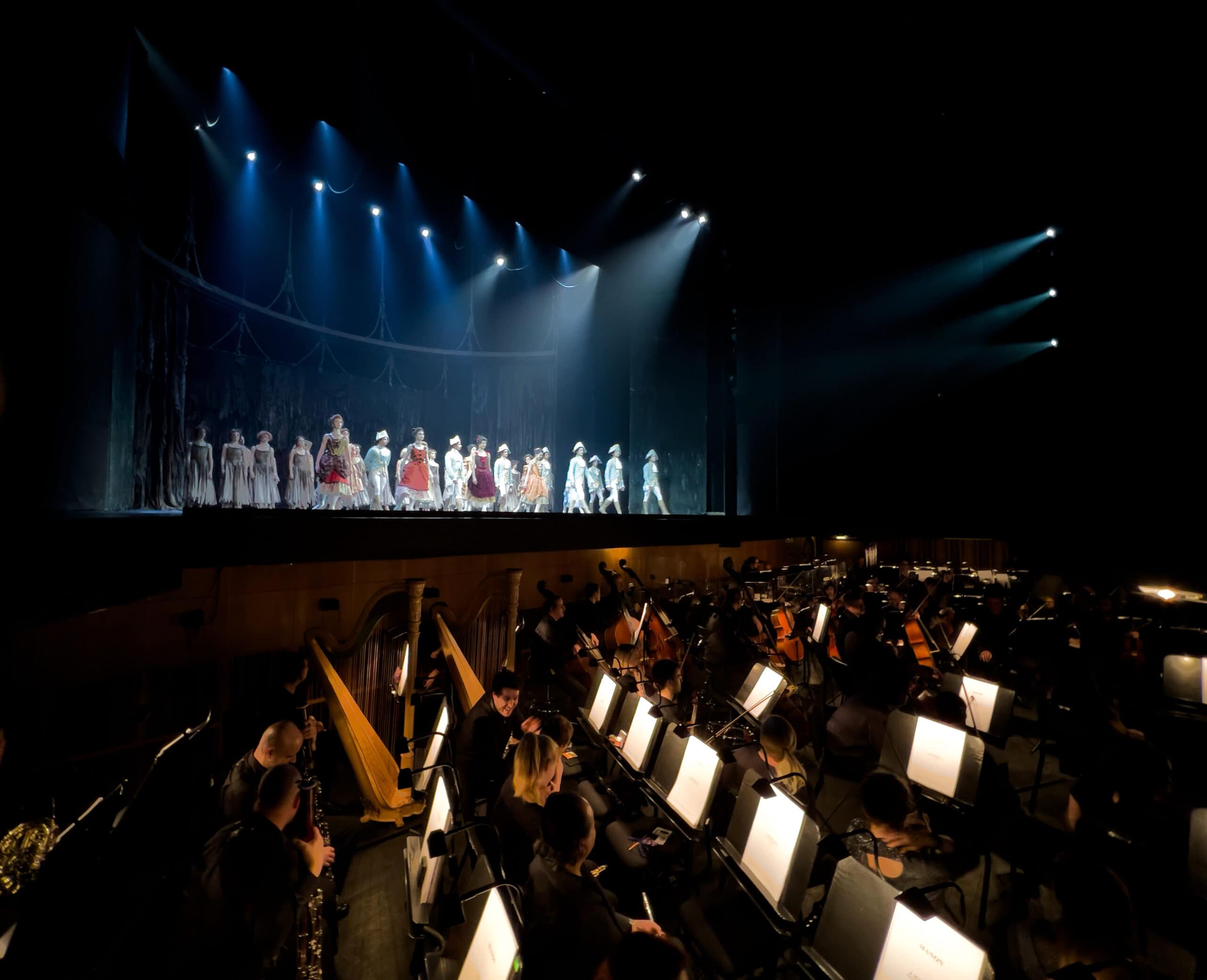
The premiere of A Midsummer Night's Dream at Vienna Staatsoper was a remarkable occasion for two reasons:

  • Jorma Elo showed his first evening length ballet in despite ten years as a a choreographer including seven years as resident for the Boston ballet. One certainly has to wait a long time for one's chance in the modern ballet world.
  • Gyula Harangozó saw the last premiere of his five year tenure as director of Dasballett of the Vienna Staatsoper and Volksoper

How was the ballet?

In the first act, Elo found himself too wound up in the plot intrigues of Shakespeare's Midsummer Night's Dream. Oberon, Titania, Theseus, Hippoylyta, Lysander, Hermia, Demetrius, Helena: there's almost too many love intrigues to keep track of even in dramatic theatre, let alone ballet. That's before bringing in the company of players to whom Elo gave the stage, not just Bottom. Not to mention Puck.

The consequence of so many bodies on stage and so many stories to unravel was excessive pantomime. A leading figure of Vienna ballet aptly applied the word old-fashioned to describe the effect.

In the 19th century, it made sense to have so much nodding and poking and face pulling to try to tell the story. In this century, first Les Ballets Russes of Diaghilev and later Roland Petit and Juri Grigorovich managed to shake off the shackles of pantomime for direct expression of the story in dance. George Balanchine and Jiří Kylián took it a step further and removed linear story as a requirement for evening length dance. It is a strange feeling to go back to the wagging heads and clutched bosoms and gesticulating hands in a new ballet.

The costumes added to this baroque feel. So much gold and detail and filaments. If the goal was to create a gilded Shakespeare of the 18th century, San Francisco designer Sandra Woodall was very successful. But together with the pantomime, the look was very dated, like something out of the 1950's. While the ballet was created for Vienna, but there is no reason to add more gilded chocolate boxes than we already have.

The music is one of the principal delights of A Midsummer Night's Dream. The score is taken from the works of Romantic composer Felix Mendelssohn Bartholdy, principally a score of 1843. In the middle of the splendid string works, a woman's choir of about a dozen is called to crowd into the left of the orchestra pit. Simina Ivan and Lydia Rathkolb made excellent lyric work of their songs. One could attend A Midsummer Night's Dream with eyes closed for the music alone. Fortunately that is not necessary in this presentation.

Among the dancers there was little to criticize. Vladimir Shishov shook off his rehearsal doldrums and gave himself quite enthusiastically to his work, his elven locks and pointy features doing him no small good as the Fairie King. Mihail Sosnovschi is in incredible form, muscular from head to toe. With his fierce dancing in the role, he is a Puck more to fear than to amuse. Wolfgang Grascher was a regal Duke of Athens. Every ballet theater should have such a movie matinee patrician. Probably a bit dull for Grascher himself after the dance exploits of his long career but excellent for the production.

wiener staatsoper midsummernight dream mihail sosnovschi and elevinnen
Midsummernight's Dream, 2010

Mihail Sosnovschi (Puck) & Elevinnen
Copyright: Das Ballett der Wiener Staatsoper und Volksoper/Axel Zeininger

Roman Lazik was an obliging Lysander. He is far better as a comic lover than a prince: his moderate athletic skills and smaller presence go unremarked. As Lysander, he is a delight to behold, light of step and countenance. András Lukács took the opportunity as Demetrius to show off his considerable caricature and grotesque talents. Levity followed his every appearance.

The theatre company was a splendid group of character dancers, led by Gabor Oberegger as Bottom. Thomas Mayerhofer, Dan Datcu, Christoph Wenzel, Richard Szabó and the striking gaunt Alexis Forabosco made the most of their opportunity for group standup comedy. I'm not sure if it added much to the ballet but in itself they were a lot of fun. At one point, Oberegger valiantly sings a love song to Titania in bed. Spoken word and song are unusual demands on a ballet dancer and Oberegger came across as a musical veteran.

Among the women, Nina Poláková shone most brightly, in her role as Helena, curiously outdoing both the Russians, Olga Esina and Karina Sarkissova. Poláková was smooth and swift, with fluid grand battements. Her performance as the rejected lover revealed a touching vulnerability. Karina Sarkissova was also quick and determined, if a little cold for my taste in her role as Hermia. She had ample opportunity to show off her considerable technical skills to which she availed herself. There was little to criticize in her brash work but little to love. One day I hope to see Karina Sarkissova dance a little more softly and with more feeling.

wiener staatsoper midsummernight dream sosnovschi sarkissova
Midsummernight's Dream, 2010

Mihail Sosnovschi (Puck), Roman Lazik (Lysander), Karina Sarkissova (Hermia),
Nina Poláková (Helena), András Lukács (Demetrius)

Copyright: Das Ballett der Wiener Staatsoper und Volksoper/Axel Zeininger

Olga Esina as Titania is a special problem. She is a magnificent ballerina, perhaps the most physically gifted and most beautiful dancer ever to grace the Staatsoper stage. But with great gifts come great responsibilities and it seemed to me that Esina never moved at more than seventy per cent capability through the evening. She still could do little harm but with a little more effort she could do so much more. Watching Esina dance is an exercise in frustration. She is the best in the company but could be so much more. This abstraction from her work gave Poláková the chance to steal the the spotlight as Helena. In Elo's A Midsummer Night's Dream should belong unequivocally to Titania.

wiener staatsoper midsummernight dream olga esina
Midsummernight's Dream, 2010

Olga Esina (Titania), Gabor Oberegger (Zettel)
Copyright: Das Ballett der Wiener Staatsoper und Volksoper/Axel Zeininger

What is the remedy? In my opinion, direct one on one coaching for Esina with a strict Russian coach. It wouldn't cost all that much to bring one of the best in from St Petersburg (they don't earn much in the Vaganova Academy) for three years to see if she can make Esina into the international prima which she should be, rather than a splendidly gifted provincial.

Gyula Harangozó might do this as Esina is his personal gift to Vienna, but I'm not at all sure the new director, Manuel Legris will grasp the issue soon enough to bring quick remedy. Perhaps I'm not optimistic enough. Legris has brought Paris's Etoile system to Vienna and of the female soloists he has promoted just Maria Yakovleva and Olga Esina to Etoile so he does understand Esina's importance to Staatsoper ballet. While improving her steps, her director might order her some special dramatic lessons as well. It's not that Esina doesn't have strage presence, it's that it's neither harnessed nor controlled. Ideally, the right Russian ballerina coach could teach her both.

On a lighter note, whoever did Esina's hair and makeup for Titania deserves to be sent back to finishing school. Esina looked so much better in rehearsal when she put up her own splendid blonde hair herself with casual cascading locks. The hairdresser managed to strap her head under a jewelled helmet that made her look more like an evil sorceress than a good fairy.

wiener staatsoper midsummernight dream olga esina and ensamble
Midsummernight's Dream, 2010

Olga Esina (Titania) & Ensemble
Copyright: Das Ballett der Wiener Staatsoper und Volksoper/Axel Zeininger

For all of these caveats about the confusion and pantomime of the first act of A Midsummer Night's Dream, the second act was genuinely splendid. Elo finally puts the story behind him and allows his choreographic imagination to take flight. The second act quickly becomes a marriage celebration with pairs followed by corps movements, by two pairs, by long pas de deux, with more group movements.

The different pieces cascade by without respite in a regale of dancing. The closest comparison I can find in George Balanchine's Jewels. A Midsummer Night's Dream offers the same varied but coherent variations. So the evening ends on a high note.

Both Iliana Chivarova and Oxana Kiyanenko lead the corps-de-ballet most valiantly in Elo's grand dances against Bartholody's famous Wedding March.

The second cast promises to be very capable as well, with Kirill Kourlaev as Oberon, Irina Tsymbal (sadly in her last season in Staatsoper, with every year comes more emotional nuance in her dancing) at Titania and with Maria Yakovleva as Hermia.

Despite the rather old-fashioned and too elaborate first act, A Midsummer Night's Dream is a splendid concotion of music and movement and light. Gyula Harangozó can be very proud of the company he is leaving at Staatsoper and of the final piece he has added to their repertoire. With the ice broken Jorma Elo will get more chances at full length ballet. It will be interesting to see whether he ever gets lost in pantomime again as in the first act or manages to communicate his meaning in dance as in the second act henceforth.

Review: Ioan Holender’s Closeup: 118 Premieren Wiener Staatsoper

April 6th, 2010 § 0

Just digging into Ioan Holender's Closeup: 118 Premieren Wiener Staatsoper, the men's gift (Herrenspend) from the 2010 Opernball, this year. I wanted to have a look at the premiers of Gyoala Harangozo as Ballet Director.

Ioan Holender Opernball with Desiree Treichl Sturgkh
Ioan Holender Opernball with Desirée Treichl-Stürgkh

To my astonishment, there was not a single image of ballet in the book. Ballet premiers are relegated to a two page list in the back.

I had heard of Holender's contempt for ballet but to just cut ballet out entirely from his commemorative goodbye album is a step too far.

While opera can be a magnificent art, most often it is tedious, filled with bombastic emotions of oversized egos.

Ballet on the other hand is the springtime, it is mortality in flight, it is delicate flutters of the soul made flesh.

The weak point in ballet is the music, which too often was primitively written for dance. Later that changed with Profkofiev and Stravinsky's ballet scores like Romeo and Juliet, Firebird and Rites of Spring.

Holender's Close Up was not even written by the author. He assented to five interviews about his time at Staatsoper where he answered the interviewer's questions about his work. The lazy man's way to writing a book.

In this case it works. Holender manages to come across as his irascible, irritable and bombastic self. The interviewer has edited the answers down to the essential so if you want to learn more about Holdender's methods, it's all there. He covers talent scouting, relationships with conductors when developing new talent.

I remember telling Muti about Angelika Kirschlager the first time. Muti didn't know her and therefore didn't want here. They all want the singers they already know. So you also have to fight with conductors and stage directors to convince them. And that is not an easy thing to do, believe me. (p. 455)

Axel Zeninger's photos as whole are excellent. As a stage photographer it's interesting to observe the changes in technology. In 1999, the early digital pictures have noisy shadows and are a little bit blurry due to long exposure times for instance in Don Giovanni, pp. 202-203). In 2009, the pictures are all sharp, as Nikon's high ISO actually works and one can shoot at 1/400 second and not at 1/30 second. But you can see what a blessing high ISO digital photography is by wandering through the photos from 1993 and 1994, such as Umberto Giordano's Fedora on pp. 84-85 or Richard Wagner's Ring on pp. 48-49.

In addition to the photographs and Holdender's insights, the program for each opera premier is included and reproduced at life size. Much nicer than a stack of programs in the corner of a shelf (as I have).

Closeup: 118 Premieren Wiener Staatsoper is recommended for Staatsoper, Holender and opera fans. It's an excellent idea to have a bound and visual summary of the Holender years, especially as it's well printed by Edition Lammerhuber. Alas there's nothing to recommend it to amateurs of ballet. Given Mr. Holender's contempt for ballet, I can't say I'm sad to see him go.

As I know more and more people from the opera again (in Moscow I spent a lot of time with opera singers and a fair amount of time at the Russian operas, but not the Italians) and I live in Vienna, I might very well read it myself to see what it is I'm missing out on.

Bürgtheater – Trilogie des Wiedersehens: Slow and dated

March 25th, 2010 § 0

This past Sunday was my first trip to Bürgtheater as a full-fledged German speaker. Dear Astrid had lured me there in a previous life as a non-German speaker. She was adamant that I must see their astonishing work.

Somehow with Astrid we ended up somewhere in the galleries. It was more a feeling of alienation and awe. Something Shakespearian with much murder. Theatre in a language one doesn't speak is rarely a winning hand so I was loathe to make any judgement. We also attended a number of charming small pieces in the Casino at Schwarzenbergplatz, far more successful.

But this time for Trilogie des Wiedersehens Radoslava and I were in the second row of the main stage.

Comfortable and close enough to make a clear judgement.

Trilogie des Wiedersehens is set in real time at an art exhibit organized by Moritz. It seems that the whole town is there, from the doctor, to the printer, to the local writer. All the woman are there too in minidresses and pantsuits.

Trilogie des Wiedersehens 2
Trilogie des Wiedersehens, 2009

The whole town is there.
Photo by Reinhard Werner, Burgtheater.

Wonderfully enough there is a cast of sixteen in the Trilogie des Wiedersehens. Almost invariably, a play with a large cast will win my heart or at least my respect. A large cast gives the director so much richer a canvas to work with.

The setting is the 1970's so many of the actors are wearing outrageous wigs, which sadly look like wigs. I don't remember seeing my parents or their friends parading around in wigs in the 70's so we are already started on a bad hair day.

I also don't remember people screaming all the time in the 70's or necessarily understand why they would be having sex in washrooms with people they don't like. The second part is more credible.

The whole piece is made up of little conversational vignettes. The stage turns back and forth between the main exhibition hall with the food and drink and a little frequented back corridor nominally watched by a guard.

In each little vignette, more information comes to the surface about the past relationships and internal angst of each character. At first we devoured these cryptic exchanges seeking to make sense of the whole. As the characters screamed more and more we lost interest.

Trilogie des Wiedersehens 4
Trilogie des Wiedersehens, 2009

The whole piece is made up of little conversational vignettes.
Photo by Reinhard Werner, Burgtheater.

The mortally slow pace between vignettes didn't help. I don't know if the director was trying to show us that the seventies were indeed a slower time, but certainly to the people living in the seventies they didn't perceive time as slow but it certainly appeared that way to us with twenty to thirty seconds between one vignette ending and another one starting.

Now both of us are busy people active in the economic sphere of life. Perhaps certain Austrians, students or bureaucrats would find the pace relaxingly realistic. But the slow pace distracted both of us from being able to enter into the piece.

It didn't help that the characters were all dull and rather pathetic. None of them could be described as aspirational. And it seemed each actor was hellbent on mocking his or her own subject. A single exception: Juergen Maurer as the doctor was serious and persuasive. His role was near inconsequential but you felt that if Maurer had more to say, the play might actually go somewhere.

Portently he tells his shrill wife "Your low self esteem doesn't allow anyone to say anything kind to you."

Instead we listened mainly to the incessant rants and shrieking of Susanne (Regina Fritsch) and Elfriede (Sabine Haupt). In the end, the characters were dull and hysterical, invoking little sympathy, whether via screaming or drunkeness or their inability to eat a sandwich without spilling cream all over themselves.

Trilogie des Wiedersehens 3
Trilogie des Wiedersehens, 2009

Instead we listened mainly to the incessant rants and shrieking.
Photo by Reinhard Werner, Burgtheater.

In short drunken idiots leading hideous lives.

The first act ends with all of the actors naked on stage standing in a posed group (carefully arranged to reduce pruriency to a minimum). The stage rotatates out again bringing them all to center and the lights drop.

The significance? That we are metaphorically naked before our friends and family. I don't think I've seen anything at Bürgtheater which didn't include nudity on stage. I love nudity on stage - it's a great way to force a reaction. But here, nothing.

Strangely, the Austrian reviews of Trilogie des Wiedersehens are quite good. Perhaps we missed the humour. But having spent over one and a half hours with the crowd on stage, neither Radoslava nor I had any wish to spend any more time with them.

We left at the half, relieved to be spared more of the shrieking and base accusations.

In terms of the stagecraft, the set and the lighting were of a high level. The costumes were acceptable but kitschy and exaggerated, a grotesque. The acting was the same.

The one particularly clever piece of stagecraft is during the scenes in the main exhibition hall with the full cast present, the director contrives to have all of the conversational groups nod at one another as if the other were speaking. The actors each took a particular tick (a nod or a roll of the eyes) to the limit. Very droll and reminded me exactly of the sometimes surreal effect of being at a party: everyone feigning to listen to everyone else.

The Viennese worship their Bürgtheater (the second or third best stage in the German speaking lands according to the Viennese). Based on what we saw Sunday, they are nowhere near the Royal Shakespeare Company. Frankly I'd expect more engagement and conviction from a RADA graduation class. In grotesque, the top Moscow theatres would leave these lost souls wandering in limbo. They outplayed most of what you'd see in Toronto, which would be similarly emotionally vacant but even less persuasive.

This is not my last trip to Bürgtheater this year. I'll give them another couple of chances to change my mind but Trilogie des Wiedersehens was not a good start. Surprising as with a huge ensemble cast and complicated relationships, it caters exactly to my taste.


Performance seen 15 September 2009.

Photos from Bürgtheater official publicity photos.

Jacques Rivette’s Out 1 Spectre Film Review

March 24th, 2010 § 0

I was twice in Film Museum this weekend. Once for the rather poor Out 1: Spectre. I amused myself to read the German subtitles and check them against the spoken French and try to learn a few new words.

Juliet Berto Jacques Doniol Valcroze
Juliet Berto as Frederique, Jacques Doniol Valcroze at Etienne:
Life is just a giant chess game but for keeps

The problem with the film Out 1: Spectre is that it is all on the spot improvisation. If you've ever done much improvisation, you know that even when it goes well it usually takes some time longer to develop. There is a lot of going in circles to get the plane off the ground. Spectre One documents those circles. For the twenty five minutes of successful drama you are forced to sit through four and a half hours of film, three hours of which are actors warming up to their subject and another half hour just extraneous long shots.

Perhaps most interesting as a social document if we trust the director to accurately document avant garde theatre practice and mœurs of the time. Some contemporary French critics did praise the sociological side at the time, so let's presume that the clothing and behaviour is correct. In that case, it is astonishing how much people smoked and drank in that time. They didn’t take it easy on the coffee either.

Out 1: Spectre ostensibly treats Balzac's Thirteen: thirteen who consider themselves above society and who are willing to cooperate to break any laws to get what they want.

The Fat Director (Michel Lonsdale as Thomas) is one of the most irritating personalities to ever grace the silver screen. He has a huge head, a great big rump, tiny shoulders, persistently dirty hair. Throughout the film, he pontificates with his mouth full of nuts or sandwiches or booze or cigarettes. He manages to put his oily hands on every attractive woman crossing the screen. Partcularly incredible is when he sits on the bed stroking his ex-mistress Sarah, while his current mistress sits on the floor, even bringing water to Sarah at his request.

Very amusing is the scene where he shares an apartment by the seaside with the most beautiful actress of his troupe and a bearded youth. The relationship isn't sorted out clearly but it looks like this Dionysian young acolytes are sharing the same bed with old Satyr. What Michel Lonsdale is doing to merit this very special treatment is difficult to fathom. His carnal facility must rival the gourmandise of his eating - a hideous image but at least one level on which one can engage with Spectre One - distaste for a personnage so strong that you can taste it. He seems to have built a cult of personality within the group.

The most engaging actor is Juliet Berto in her role as seductress/thief/blackmailer. The different tricks she plays to part foolish men and their money are entrancing for a man. Have you ever been a dupe to a broad on the make? Watch her performance and you know you have been. Her most formidable adversary is Etienne (Jacques Doniol-Valcroze) who is one of the conspiratorial ringleaders. His gravelly voice and polite strength were incredibly impressive. Apart from a single scene at the end where he and Michel Lonsdaleare talking around the conspiracy, Doniol-Valcroze's improvisation is the most fluent and convincing. You know that he's dealt with any number of duplicitous women and is not phased by them in the least.

Jean Loud seems to be lost here. He is the glue binding all the different parts of the film together with this investigation of the thirteen.

My favorite director Eric Rohmer appears briefly in a cameo as a university professor discussing Balzac. Not a particularly convincing performance but an amusing enough inside joke. It's amazing how old Rohmer was even back in 1972. Astonishing that he is still making movies. Eric Rohmer gave up on automobiles in his thirties and since then cycles everywhere (I am not sure that is presently true granted his age). Rohmer made the decision to abandon automobiles for environmental reasons. Hopefully, cycling/car abandonment has a very positive effect on my own long term vitality and productivity.

But in the end Out 1: Spectre disappoints. So much time for so little.

The image is also hideous. I don't know what the original print looked like but what's left in the can is a washed out pink and orange mess. You can hardly see the colours. The visual inadequacy of the material in this case is a substantial problem. Out 1: Spectre is most successful as a social document. In a social document, one wants to be able to clearly see the clothing and design, to taste and feel the surroundings.

So somebody saved some money with inadequate development facilities. No wonder they were worried about cost issues with dozens of hours of footage to tie together.

Curiously enough, the full Out 1 times in at twelve hours and forty minutes. It was supposed to be a miniseries for French television. TF1 refused to air it. Jacques Rivette didn't want to see his work thrown away so he edited it down to the 225 minute version we saw. Apparently, the longer version makes more sense. I don't have twelve more hours of my life to find out.


Timing in at 246 minutes and even longer, La Maman et la Putaine is otherwise the inverse of Out 1: Spectre. There are only three core characters. The action takes place in a minimum of settings (Café aux Deux Magots, a street by the Pantheon, a dormitory room and a filthy apartment).

All the three characters do is talk and drink. But the relationship lives its own life. Every moment is absorbing as you sink further and further into their psychosis and realise that despite their connection, a trainwreck is up ahead.

Most people are familiar with Jean-Pierre Léaud flippant work in Truffaut's film as his own alter ego Antoin Doinel. Later in life Léaud slummed with half hearted efforts at acting. But here in La Maman et la Putaine, he is entirely persuasive as the café wastrel pocket philosopher. The line between life and cinema seems to disappear entirely.

While the text seems absolutely natural, it is in fact tightly scripted. None of the improvisational excesses of Spectre One. The difference in quality between these two similarly dialogue driven films from the same epoch with many of the same concerns should be a case study in the dangers of improvisation in the feature film format. A tight script makes all the difference between inspired and boring.

Both Bernadette Lafont and Françoise Lebrun are brilliant as Léaud's companions in their ménage à trois.

Jean Eustache made few feature films in his relatively short life (43 years), committing suicide.

The one trait the two films have in common are the prodigous quantities of alcohol, coffee and cigarettes consumed.

No wonder most Parisians in their forties look a damn wreck.


References

It can be hard to find good information about Out 1: Spectre so here are some references to help.

Detailed plot entry at Wikipedia.
Jonathan Rosenbaum review with pics
A rather weak IMDB entry

Draft originally written in April 2009