Roland Petit’s Die Fledermaus (La Chauve-Souris) at Vienna Staatsoper

January 30th, 2009 § 0

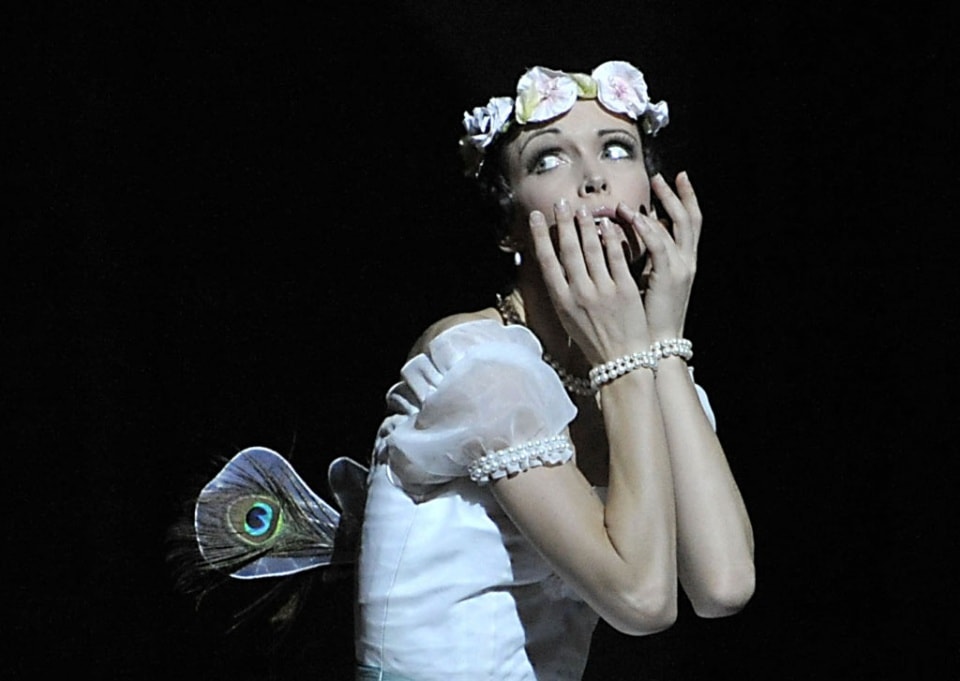
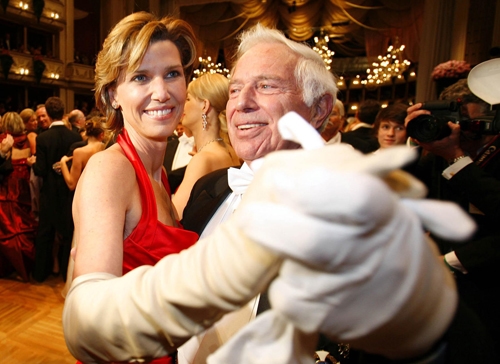
In what seems to be an endless tour at Wiener Staatsoper of masterworks from great choreographers of the 1970's, the latest premiere brings us Die Fledermaus, a.k.a. La Chauve-souris from maestro Roland Petit.

Roland Petite Chauvre Souris Staatsoper
Roland Petit brings his Chauvre Souris to Staatsoper:
85 years old and hard at work and happy
Early retirement is heavily overrated

La Chauve-souris is a particularly amusing example of how cultural cross-pollination can go full circle.

Mr. Petit's inspiration for La Chauve-souris was an operetta by Johann Straus (Jr.), the famous waltz king. Die Fledermaus is part of Austrian folklore, televised every year at New Year's on the national television station. Mr. Petit transposed Die Fledermaus's scenes at the ball to Paris's own Maxim's. This production is the first visit of the ballet version of Die Fledermaus to Vienna.

At the heart, the story remains the same. A man with a beautiful wife has grown too accustomed to her, as men do, even bored. Johann's wife Bella solicits her husband's attention to no avail. He prefers even the newspaper to her company. In evening however Johann has other plans. He likes to slip out to Maxim's to dance, flirt and even seduce.

Kirill Kourlaev Olga Esenina

While Johann is ignoring her, Bella - as attractive women, married or not, always do - has an admirer. In this case, the admirer is their children's tutor Ulrich.

Rafaella Sant Anna Olga Esina

When Johann has disappeared to Maxim's, Bella calls Ulrich to the house. Ulrich sees his chance and goes in for the kill, hoping to seduce Bella the same evening. But for the moment, Bella cannot bring herself to betray her husband. Ulrich has a backup plan - to disguise Bella and take her out to Maxim's where she can see Johann's womanizing for herself.

Eno Peci Olga Esina Chauvre Souris
Eno Peci Olga Esina fledermaus
Eno Peci Olga Esina faints
Eno Peci Olga Esina
Eno Peci Olga Esina
Olga Esina Odile
Olga Esina Odile

Ulrich's hidden agenda is that when Bella has seen Johann's infidelity, she will be easy prey for Ulrich himself.

Roland Petit's Die Fledermaus (La Chauve-Souris) at Vienna Staatsoper Continues »

Meet Manuel Legris – Vienna Staatsoper’s new ballet director

January 8th, 2009 § 1

The Vienna State Opera ballet has a new Artistic Director.

He is a familiar name to connaisseurs of European ballet, Manuel Legris. Manuel Legris has been one of the top men at the Paris Opéra since the 1980's.

Manuel Legris Shinoyama
Manuel Legris at the Opéra de Paris by Shinoyama
The Paris Opéra is sending us on of her best

He has danced everything from all the classics, through George Balanchine, John Cranko (Onegin), Sir Kenneth MacMillan (Manon's Story), Twyla Tharp, John Neumeier (La Dame aux Camélias), William Forsythe Juri Kylian (Il ne faut q'une porte), Trisha Brown (O zlozony / O composite: Legris came to Vienna's ImPulsTanz with this), Angelin Preljocaj (Le Parc) even to Vienna Statsoper's own Renato Zanella (Angel, Alles Waltz).

I cite all these choreographers names - most of them worked with Manuel Legris at the Paris Opéra - as this amazing cross-section of dance makers is exactly what Monsieur Legris brings to the Staatsoper: a first hand familiarity with the best choreographers of the last forty years.

As a classically trained dancer in a classical company, Monsieur Legris knows how to integrate contemporary choreography into the heart of a classical company. The Paris Opéra should be the model for all classical companies today: a vibrant classical repertoire combined with the very pinnacle of contemporary choreographry.

Meet Manuel Legris - Vienna Staatsoper's new ballet director Continues »

Farewell Jörg | Abschiedsbrief Jörg Haider

October 16th, 2008 § 4

Jörg Haider was the first person I met in Austria outside of my girlfriend's family.

Anna was dancing at the opening of the Carinthian Summer Musical Festival in July 2003. I had been in Austria for about two days before the festival. We'd had time to go swimming once and then it was off to the lake and Anna's performance there.

We were both thinking about the dance - the choreography was in order, but we were still concerned about her costume and Anna's hair. Anna had to get her head shaved for the asylum scenes in Lapinthrope just a week before. Wigs, scarves, hats were all proposed to make hide her shaved head. In the end the bare head prevailed (it's a lot easier to dance modern without something precarious glued to your head). With a woman as beautiful as Anna that summer and a dancer as talented as Anna, the audience is unlikely to pay too much attention to the length of her hair. And so it was.

The dance went very well.

On the way there, I heard Haider would be there, in his role of Landeshauptmann to open the festival.

Of course, I'd heard of Jörg Haider before. Even in Canada we got news of the Austrian politician who was supposed to be a new Hitler, threatening the rise of a fourth Reich.

Based on what I'd read in the press, I expected to find a brute - either foaming at the mouth and shrieking like Hitler or a portly sadist like Goering.

Instead, an elegantly attired fortyish and athletic man in an immaculately tailored Italian suit rose and spoke for over half an hour. If Haider had notes, he didn't need or use them much. It was the first time I'd heard a long speech in German, outside of the vituperative extracts from Hitler's rallies.

jorg haider speaks
jorg haider speaks

Haider's voice was resonant and clear, the structure of his sentences as well tailored as his suit. Little acquainted with the German language at that time, I was only able to follow the phonetic balance of Haider's rhetoric.

The audience was as rapt as I'd ever seen at the speech of a politician. From Haider's end there appeared to be little grandstanding - none of the whipping up of the crowd that so cheapens many politician's public speaking. Just an engaging speech.

Like most young Carinthian women living in Vienna, Anna had an obligatory loathing of Haider. Later I learned why from Astrid. If you didn't profess anti-Haider sentiment, you would instantly be blackballed back in Vienna. You would be ghettoized as an undesirable Carinthian.

Choreolab 08: Vesna Orlic – Brenda Sahel – Dan Dactu – Karina Sarkissova – Samuel Colombert

May 9th, 2008 § 2

This was my fourth choreolab in Vienna. Except it wasn't in Vienna. For some reason, the Vienna Ballet Club moved their marquee event to St Polten. Now St Polten is fine but it's over an hour from Vienna. I missed the Friday night premiere so I can't tell what attendance was like for that night, but on Sunday the crowd was very, very ballet, apart from the Hungarian ambassador to Austria and a few other political luminaries.

8090 Una Zubovic Lisa Cano
Una Zubovic - Lisa Cano in Vesna Orlic's Parfum

Nothing against St Polten, but please bring choreolab back to Vienna, to the Odeon or Museumsquartier and to a wider public. choreolab should not be a private event for the Staatsoper inner circle and dancers.

The evening was very short running just over an hour with six choreographies. Gone were the past years of incredible forty five minute works from Vanessa Tamburi or Patricia Sollak. We were treated with only miniatures in this year's choreolab.

Choreolab 08: Vesna Orlic - Brenda Sahel - Dan Dactu - Karina Sarkissova - Samuel Colombert Continues »

Donauinsel 23.09.2007

November 7th, 2007 § 0

Donauinsel_23 09 2007_6666

Donauinsel 23.09.2007 Continues »

Falter 30 years anniversary party

October 1st, 2007 § 0

Falter 30 years
Falter 30 years

Photos Falter 30 year anniversary party in the Ottokrieg Brauerai in Vienna Saturday 22 September 2007.

Falter 30 years anniversary party Continues »

Austrian GoaTrance Photos: Cosmic Party WUK 27-1-2007

January 30th, 2007 § 0

Great party on an icy Saturday night in Vienna.

Goatrance-Girl-Austria Mg 1546
Great dancing from this group of friends
this is what I love about goa
the music, the light and the joy
flowing through one's whole body.
Perfect moment.

Beautiful people. Nice atmosphere. Full, but not too crowded. Nothing worse than a goatrance party where there is no space to dance.

Austrian GoaTrance Photos: Cosmic Party WUK 27-1-2007 Continues »

Homunculus: Wiener Küche

November 27th, 2006 § 0

The last years have not been easy ones in the dance world and Homunculus is going through the most difficult period in a creative institution's life. For twenty-one years, they have been producing contemporary dance - indeed they are one of the originals in Austria.

Homunculus-Wiener-Kuche-1

At this point, all the crazy fire of beginning and triumphing against all odds are behind Nicolas Selimov and Manfred Aichinger. They have built an institution. They have been through three generations of dancers and are gradually going through another one. Where does one go from success?

To their surprise, it doesn't get easier. Selimov's essay in the program states:

The big challenge for we dance creators is to make certain that contemporary dance maintains its place in the spectrum of performing arts!

I am as astonished as Selimov at the long winter of dance throughout the world, with slowly dwindling audiences and mediocre institutional support. Like Selimov, after discovering dance for myself twenty years ago, I only expected dance to grow and grow in popularity.

The one real long term success story in contemporary dance of which I know is Anna-Teresa de Keersmaeker's Rosas. She continues to produce varied (but stylistically unified) work which fills theatres, year after year. Keersmaeker is brutal in her choice of performers. One fits a mould and one hits one's marks every time if one wants to be a Rosas dancer. Keersmaeker has built a school and from the school both takes new dancers. She has managed to develop talented new choreographers from internal ranks like Salva Sanchis. Yet still Keersmaeker herself remains the undisputed center of this miraculous company. What will happen to Rosas in her absence?

Homunculus faces some of the same challenges. They have done many good things. Selimov and Aichinger have given a chance to some of their dancers (Karin Steinbrugger, Martina Haager, Andrea Stodder) to choreograph on the company - so far with mixed success - no clear replacement for themselves has emerged. They had the very good idea of grooming Staatsoper dancer Nicky Adler, as an alternative main stage choreographer for the company - until the new Staatsoper direction refused to allow Adler any free rehearsal time in the season for work outside the Staatsoper Ballet. A Staatsoper dancer is very well paid and eligible for a pension on retirement so losing one's place there for freelance choreography would not be a wise move.

Last winter Homunculus was scheduled as the opening show of 2006 at Tanzquartier with a promising program of live basketball played in Hall G of Museumsquartier with nets and a court while the dance piece went on. Unfortunately, for reasons unknown to this reviewer, that show was cancelled. That particular TQW season was much the worse for the absence of Homunculus. The last year has not been easy for Homunculus.

In many ways, Adler was much the best choice as a new main stage choreographer for Homunculus. His work is intellectual and inventive and very much in the Homunculus company tradition. For Adler, the fit is very good as well. A Vienna native, Adler grasps the Homunculus idiom intuitively. Rarely does Adler need the grace and the technical perfection of Staatsoper dancers - but in every show he asks for something strange and different.

Adler's rien ne va plus garnerred several prizes for Homunculus and very good critical notices.

A second recent experiment with an outside choreographer Bernd Bienert was less successful. His show Alzburg: Eutopa at Semper Depot garnered little critical praise while privately the Homunculus dancers were furious to see their talents wasted, complaining both about the action which involved a lot of standing around and lying on the floor and Bienter's imperious manner (quite frankly standard practice in the ballet rehearsal rooms) and his refusal or inability to take advantage of their own invention and fantasy. The same Bernd Bienert works very well with classically trained dancers. His Unruhiges Wohnen at ImPulsTanz two years ago was an absorbing if depressing tour-de-force of modern dance. I have reservations about the score and the dramaturgy based on Elfried Jelinek's story about the abuse of a little girl - but Bienert never ran out of movement, nor was his neo-classical choreography ever self-conscious or stilted.

In the meantime, that leaves Homunculus without a new choreographer. But necessity remains the mother of invention: Nicolas Selimov who for the last seven years has been more intendant than creator stepped back in with company founder Manfred Aichinger for this year's main autumn piece Wiener Küche. Selimov's Oh it's Vienna is the best piece of work I've seen from Homunculus - and while I only saw it in a rehearsal performance, I believe time will show Oh it's Vienna to be one of the lasting works of contemporary Austrian dance. But Oh it's Vienna is not so much dance as cabaret.

And so is it with Wiener Küche.

The show is held in an empty warehouse space on Neustiftgasse. How or where homunculus found such desolate space empty right in the middle of Vienna is something of a miracle, but the setting is superb. An artificial foyer is created by wrapping orange tape around the columns. The audience is required to wait as a group in the lobby which is lit by soft and warm lighting. As usual, Homunculus set and light design was the work of Silvia Auer.

At eight o'clock sharp a team of black shirted security guards come to the foyer check the audience's tickets and let them into the theatre one by one. This is just the first of four checkpoints on a winding path to the actual main stage space. Our bags and persons are checked later. The dancers are poker-faced and severe throughout the process, showing no hint of humanity.

In a final humiliation the audience members are gathered into a tight space as a group where the tallest of the male dancers in a headset (Julian Timmings) selects people to enter, one by one. Yes, it's a nightclub queue. Consciously we know that eventually we will all be let in but the feeling of absurd helplessness of waiting on some idiot twenty year old to select or not select us remains.

Once inside the tables are turned, just as in a nightclub. We are served drinks in our seats for one euro each by a lovely waitress (Natalie Trs).

Throughout there is a woman's voice speaking softly but severely to the audience as a group and a collective. What we should and should not do. Just as in an airport or train station. The voice is quite incredible, like the official voice of modern authority, from airports to television. Curiously the voice is that of former Homunculus dancer Susi Wisiak.

If you don't do what the voice of authority says in Austria, the consequences can be severe. Austrian organisational systems works very well and are not to be lightly bucked. We all know this here and are appropriately intimidated.

Once the audience is settled, the voice starts addresses itself more often to the performers. There is a long speech at the beginning about what the show will be about - “no dance, whether you paid your place as a spectator for the performance or not”.

There was a great deal of t-shirt work in the show. For the main show all the shirts were white. The first set of shirts included work designations like “Contract Worker”, “Part time worker”, “Independent Contractor”, “Full time worker”. These shirts made an overtly political point about the precariousness of modern existence. There are very few sure jobs in this day and age. But the relationship of economic structure to the roles is not quite clear. The labelled characters feel like something of a regression to Medieval allegorical theatre.

Julian-Timmings-Amadeus-Berauer-2

Through most of the evening a group of people in business clothes sitting behind a table was projected on the ceiling - a hypothetical committee of those above. In addition to the voice and committee projection, the artist Eva Flatscher practiced light painting with a Wacom tablet which was projected behind most of the dance sequences. Personally I found this light painting too digital but I am no great amateur of electronic art.

At the beginning of the show, each of the Homunculus dancers had to do a dance for the others, for the so-called committee. They were given performance notes and sometimes numerical evaluation. The performances were not especially interesting - Amadeus Berauer began the festivities by puking on the floor, the lovely Karin Steinbrugger shrieked wildly, looking like a Nicole Kidman gone mad. Natalie Trs has the most astonishing section of all, wherein she strips down to nothing and sings Janis Joplin ditties.

Natalie-Trs
Natalie-Trs

All of this sounds like more fun than it was. But frankly I missed the underlying gag here, until a fellow spectator pointed it out to me. Much of Wiener Küche is based on reality tv. I've seen people I know well sit at home and watch other people eat buckets of raw worms for a $100 prize on North American wide television. One does of reality tv was enough for me but most people are fascinated by it. Astonishingly, those who fail to eat the worms or lie down with rats or whatever absurd challenge was put in front of them face verbal abuse from the moderator for their lack of courage. What could persuade someone to put up with that and not dip the moderator's head into the bucket, I cannot tell you. Apparently the Nicolas Selimov and Manfred Aichinger wonder about this too.

Natalie-Trs-Kun-Chen-Shih-Julian-Timmings-Amadeus-Berauer

At some point the reality tv panel takes a back seat to the Homunculus dancers cooking dinner. To follow the television metaphor, we move from reality tv to cooking show. I wondered how earnest the cooking was. The cooking was in deadly seriousness. Every night after the show, that is the artists' dinner.

The pun on Wiener Küche and the idea of a night at home with Homunculus entertaining one another with skits while they cook is entirely engaging. It is a great idea for a film and in fact is most of the framework on which Denys Arcand's masterwork Le déclin de l'Empire Américain is hung.

In addition to the cooking and the skits, the show was broken up by about four tangos from Betka Fislova and Germano Milite. While they danced competently enough, there was no real passion in their steps. This was probably intentional - ballroom dancing shows are currently very popular on Austrian television - and the dancing can be very desultory and proforma there as well. Still it added numerous extended sections without much passion. I know television is boring, fake and lifeless. I don't need to come to the theatre to hear about it.

Betak-Fislova-Tango
Betak-Fislova-Tango

It's a pity not to see more dancing from Karin Steinbrugger, Andrea Stotter, Martina Haager and Eva Maria-Kraft who are all wonderful movers. Eva Maria-Kraft's dance sequence at the end was deliberately programmed for constant interruption by the other dancers. But Wiener Küche is unabashedly cabaret and not dance.

Somehow, in the end, the parts were greater than the sum of the whole. After about 90 minutes the pace started to drag very badly. Curiously enough just after this the female voice came back with a ten minute countdown.

What is especially difficult is that the first half hour was so unexpected and so strong - who expects to be frisked for weapons and have one's ticket checked three times on the way in to a modern dance performance in Vienna?

The negation is much stronger than the statement. I don't know what Aichinger and Selimov are proposing as an alternate world. Does an alternate world still exist in the din of senseless media and information overload?

But that is material for another show.

Overall Wiener Küche is recommended. As much of Wiener Küche is partially improvised, the overall tone of the performance can vary significantly. My friends who had seen it on an another evening and come back for a second showing thought that Wiener Küche has been much stronger the first time they'd seen it.

Alll Photographs - Max Moser. A short video excerpt of homunculus Wiener Küche available at kulturvision.at.

Sleeping with the Enemy: Dr. Nicole Haitzinger

November 24th, 2006 § 0

This fall I inscribed myself for the Tanzquartier Wien's Augen für Tanz program.

There were two historical lectures, a theoretical section, a dance workshop and today began the journey into the true heart of darkness - two seminars on dance analysis.

I was able to arrive early and meet the previously unknown to me Dr. Nicole Haitzinger before the seminar. Upstairs on one of the enormous red couches of the TQW videothéque, Dr. Haitzinger was sorting through her notes a final time. Beside her one of the enormous TQW televisions rested on blue screen, while a half dozen video cassettes were scattered across the coffee table in front of her.

Judging by the amount of support materials on hand, we were preparing for a full day of discussion. Somehow these dance lecturers seem to think an hour and a half is a lot longer period of time than it really is.

An hour and a half is just enough time to develop and expand a single thought.

Dr. Haitzinger is a young woman of about thirty, with long dark hair. Her face is round with enormous dark eyes and a full and very red mouth. When not speaking she looks like a sad little girl, full of bewonderment. On this day, her slender legs were clad in black knee boots and she wore a long knit dress of beige and grey tones with a dipping neckline.

I had seen Dr. Haitzinger many times before in private life but hadn't the slightest idea who she was. I was always thought she was one of the dancers in one of the TQW regular companies but I often wondered how I'd never managed to catch her on stage. It turns out that she is a sometime curator at TQW and one of the leaders of a new dance theory program at the University in Salzburg.

So with such a beguiling guide to dance analysis why do I say "heart of darkness"?

The program that Dr. Haitzinger curated at TQW was one of the those which took us far away from movement and into Vienna conceptualism.

For me Vienna conceptualism is the end of dance. Movement is made secondary to the idea. Indeed, for the most part movement is considered to distract from the idea. Normally in Vienna conceptualism one uses a minimum of props or staging. We face a black room and dancers dressed as casually as if they wandered in from the Vienna U-bahn.

The leading institutional proponent of this experimental theatre movement masquerading as dance is the Tanzquartier Wien, who have been programming more and more works of this kind, most notably those of Philipp Gehmacher but also including the old bird.

To get a quick idea of the theatric nihilism these folks are working towards, here is Dr. Haitzinger's collaborator Claudia Jeschke's laudatory evaluation of Jerome Bel's work (from the homework).

He searches for the smallest possible significant in the complex semiotic filed of performance, as he cannot show what he would like to show: 'nothing'.

As far as I'm concerned, if Bel or Gehmacher don't want to show us anything, they'd do well to stay out of the theatre and don't waste my time or that of the other audience members. 'Nothing' is available at home every day at the hour which suits us and at no cost.

I like to think of myself as somebody with an open mind. I try to see everything and appreciate everything for what it is. What better way to try to come to terms with Vienna conceptualism than by participating in seminars from one of its leading proponents...

The seminar itself was less tightly organised than the quantity of support materials would suggest. We saw excerpts from Merce Cunningham and Sasha Waltz.

The Sasha Wilde excerpt was everything that one might expect. Dancers standing around delivering text rather than moving. The Merce Cunningam piece Rain Forest was far more interesting, a combination of Warhol's helium balloons and very tightly danced modern choreography.

For Dr. Haitzinger, Sasha Wilde's piece was more interesting. It represents a development of Pina Bausch's tanztheatre but without narrative or structured emotional arc. It is in Dr. Haitzinger's words, "a pure collage" of different motifs. An evening length piece without narrative or emotional structure in my view would be better called a mess than a collage.

But Dr. Haitzinger's approach to dance is very different than my own.

According to her, dance analysis rests on three supports. But before even beginning there is an overriding precept: to not respond to the work at an emotional or aesthetic level. One must only try to analyse it. A piece is as interesting as what it offers analysis.

The three parts of dance analysis:

  1. Movement analysis. What kind of movement. Choreographic strategies, body concept.
  2. Staging. Concept and dramatic strategies.
  3. Material. Did the you see this on stage? Did you read about it and see photos? Did you see it on video? Did you see a proper film of the production? Who wrote the texts you read about the piece?

The three reference points above sound quite useful as a critical checklist and I may start to use them more consciously in my own critical work. But by excluding aesthetic and emotional response from the process one cannot accomplish anything as a dance critic, apart from mislead people. Often the best ideas offer the worst pieces. Dance is about execution and movement, not about abstract conceptualism. To do dance justice, one must respond emotionally. Whether one does this through narrative, text or movement is all the same to me. But engaging the audience is task number one. Without engagement, one has failed at the underlying tenet of theatre - just as if in organising a dinner one failed to provide food or refreshment. It could be called a meeting but it could not be called a dinner.

For me this is why all movements like Vienna conceptualism are doomed to fail. I only hope they don't take the dance audience out for good while they are at it.

Empty conceptualism all the more dangerous is when it comes in such attractive wrapping paper. Better that the effort were spent making the performances engaging, rather than the analytic lectures.

Part two of dance analysis comes later in December.

In the meantime we have our homework: a recent long article Body and Archive (Körper und Archive) by Dr. Haitzinger herself in collaboration with Claudia Jeschke, another recent essay from Claudia Jeschke, "Techniques of Contemporary Choreography in Germany", Merce Cunningham's essay "Space, Time and Dance" (1952) and George Balanchines' "Note on Choreography" (1945).

My final thought was to wish that the Vienna conceptualists would take as much care with the stage presentation as Dr. Haitzinger does in her personal presentation.

ImPulsTanz 2006 Coverage

July 24th, 2006 § 0

ImPulstTanz 2006 is fantastic. The limited coverage you see here has nothing to do with the programme. I've missed wonderful things, like the opening night with Anna Teresa de Keersmaekerr which I have from reliable sources as unbelievably wonderful.

My apologies for the limited ImPulsTanz coverage this year. My commercial business is growing by leaps and bounds. We have new employees and new offices and new clients and there is only one of me. I've also spent a lot of my discretionary time in the last few months more or less successfully learning German.

Finally truly learning that the only capital we only really have is time.

One of my projects for 2006 and 2007 is to make myself replaceable in my own business so that I will be able to spend most of the month at ImPulsTanz next year.